
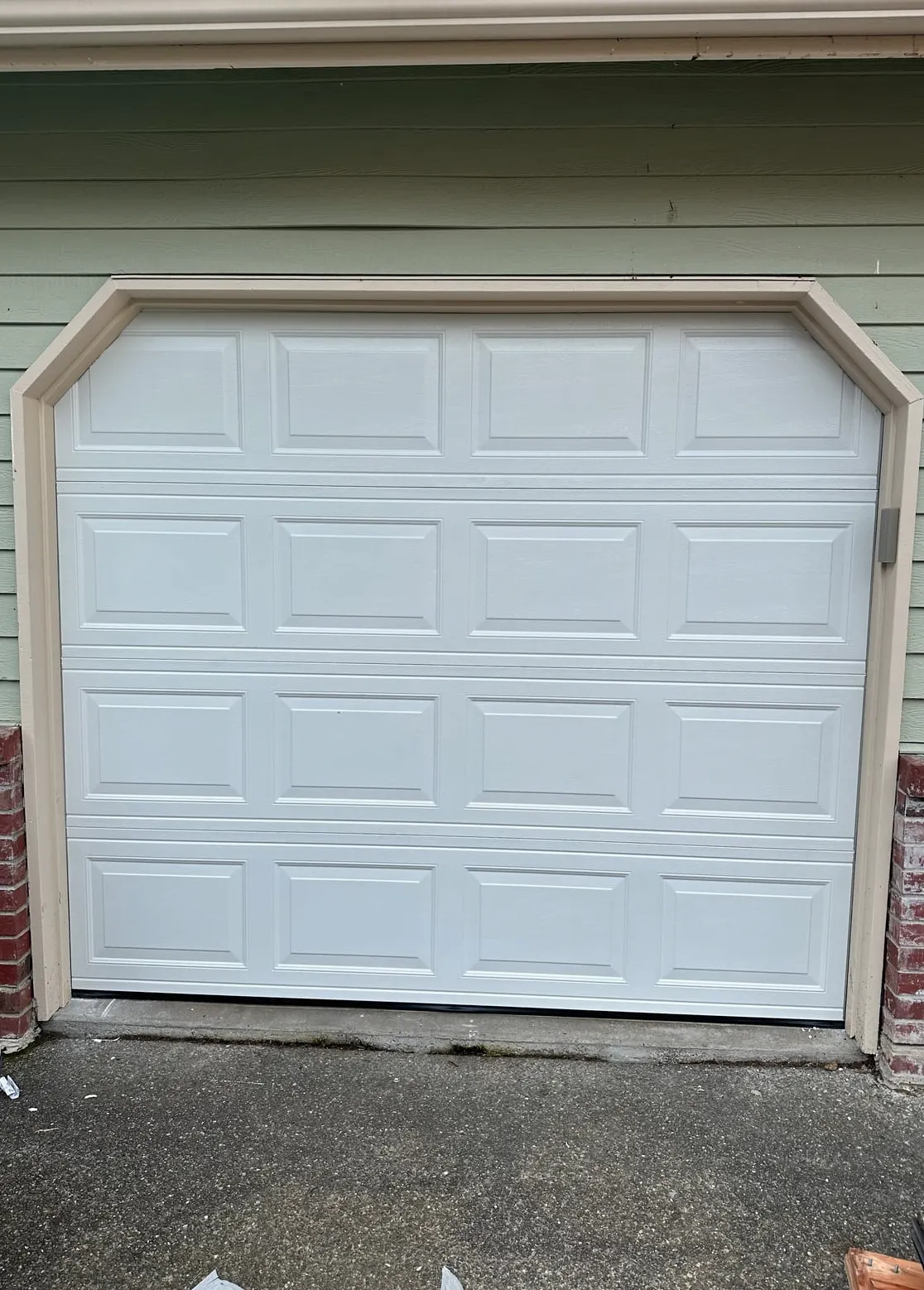
What skipping this costs you by next hurricane season
A standard home inspection usually gives the garage door a few seconds: open it, close it, note if it moves. That's it. What it rarely checks is whether the springs are near the end of their cycle life, whether the cables are fraying, or whether the door actually meets wind-load expectations for a storm. Buy the house without checking these things yourself, and you're not just risking an inconvenient squeak. You're risking a spring that snaps while a car is underneath it, a door that blows in during the next tropical system, or a bottom seal that's been letting water into the garage for two seasons already, swelling the panel from the inside out. None of that shows up on a disclosure. Here's what to check before you close, and what it means if any item fails.
1. The Manual Lift Test
Disconnect the opener (pull the red release cord) and lift the door by hand to about waist height. It should move smoothly and stay put on its own. If it's heavy, drops on its own, or feels unevenly balanced side to side, the springs are worn or mismatched. A failed balance test means the opener has been doing work it wasn't designed for, which shortens the life of the motor and gears too.
2. Cable Condition at the Bottom Brackets
Look at the lifting cables where they attach near the bottom corners of the door. Check for fraying, rust, or any strands that look frayed or separated. In humid climates like this one, cables corrode from the inside out, so a cable can look fine and still be close to failing. A worn cable under tension is a safety hazard, not just a maintenance item.
3. Track Alignment and Roller Wear
Stand back and sight down each track. Gaps between the rollers and the track, visible bends, or loose mounting brackets all point to a door that's been running off-track intermittently, even if it looks fine when closed. Rollers that are cracked or worn flat on one side mean the door has been working harder than it should, which accelerates wear on everything else.
4. The Wind-Load Rating Label
Check the inside of the door for a manufacturer's label noting wind-load rating or impact rating. Many older doors in this area were never upgraded to match current wind-load expectations for coastal-adjacent, storm-exposed regions. If there's no label, or the door predates wind-rated manufacturing, that's a door that may not hold up in a serious storm, regardless of how solid it looks sitting still.
5. The Auto-Reverse Safety Test
Place a block of wood (a 2x4 works) flat on the ground where the door would close. Run the door down. It should reverse the moment it touches the wood. Also wave your hand in front of the photo-eye sensors near the bottom of the tracks while the door is closing; it should stop and reverse. If either test fails, the opener's safety system is compromised, which is a serious issue if kids or pets use that garage.
6. Weatherseal and Bottom Panel Condition
Check the rubber seal along the bottom of the door and press on the bottom panel itself. Soft spots, cracking seals, or a seal that's pulled away from the track leaves an open path for wind-driven rain during the afternoon downpours common here. A bottom panel that feels spongy or shows water staining on the inside means moisture has already been getting in, and on wood composite panels that can mean swelling or rot that's only going to get worse.
7. Panel Material and Rust Check
Run your hand along the panel seams and look closely at any exposed screws or hinges. Surface rust on hardware is common and not alarming on its own, but rust that's spreading into the panel seams, or panels that look slightly warped or bowed, point to long-term moisture exposure. That's a sign the door has been fighting humidity for years, and that fight doesn't stop once you move in.
8. Opener Age and Backup Power
Check the opener's manufacture date (usually on a sticker on the motor housing) and ask whether it has battery backup. Openers without backup power leave you manually releasing the door during outages, which happens here more often during storm season than most buyers expect. An opener over 10-15 years old is also worth budgeting to replace soon regardless of how it's performing today.
When to call White Springs Overhead Door Co
If you walk through this checklist and find a failed balance test, frayed cables, or a door with no wind-load label, don't wait until it's an emergency. We can run a full garage door tune-up and maintenance check to catch what an inspection missed, and if the springs or cables need replacing, we handle garage door spring repair and cable repair on the spot rather than patching around the problem. For doors that are undersized for this area's storm exposure, we'll walk you through panel and track options that actually hold up.
If you're closing on a home anywhere from White Springs to Live Oak, Lake City, Jasper, Wellborn, Fort White, Jennings, or Lee, give White Springs Overhead Door Co a call before move-in day. A thirty-minute inspection now is a lot cheaper than finding out the hard way during the next storm.