
The Short Answer
The fastest way to protect your home before a storm is to reinforce the garage door panels and tracks against wind pressure, make sure the opener has a battery backup, and clear anything near the door that could turn into flying debris. Skip this and you're not just risking a dented door — you're risking a failure that lets wind pressurize the inside of your house.
Why the Garage Door Is Your Home's Weakest Wall
A standard garage door opening is one of the largest unsupported gaps in any home's exterior. Compare it to a wall: studs, sheathing, and siding are built to resist wind load as a continuous structure. A garage door is a single moving panel system held in place by tracks, rollers, and springs — none of which are as rigid as framed lumber.
When wind gets strong enough, it doesn't just push against the door from outside. If the door buckles or blows inward, wind rushes into the garage and pressurizes the entire house from the inside out. That internal pressure is what lifts roofs and blows out windows on the opposite side of a home. This is exactly why building codes in wind-prone parts of Florida treat garage doors as a structural component, not just an appliance.
Signs Your Door Won't Hold Up
- Visible gaps along the bottom seal or sides where daylight shows through
- Tracks that flex or pull slightly away from the wall when the door moves
- Dented or oil-canned panels that already show the door isn't fully rigid
- Rust forming around spring coils or hardware — common after a humid summer
- A door that feels heavy, slow, or uneven going up and down, which usually means a spring is weakening
Any one of these on its own might just be a maintenance issue. Combined with sustained wind, they're failure points.
A Real Pre-Storm Checklist
1. Tighten and Inspect Hardware
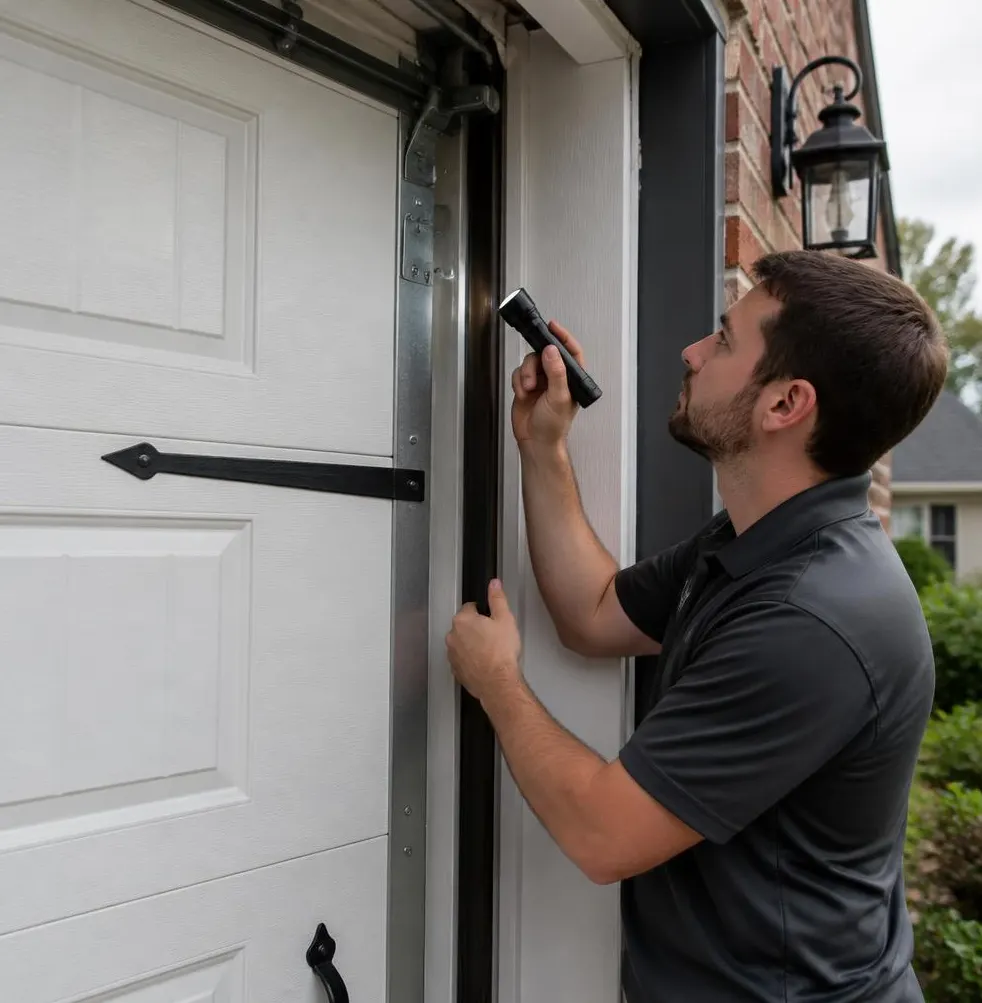
Go track by track and check every bolt, bracket, and hinge. Humidity and seasonal swelling loosen fasteners over time, and a loose track is often the first thing to give way under wind load. Lubricate rollers while you're at it — it also helps reverse some of the stiffness that builds up from moisture.
2. Check the Springs Before the Storm, Not After
A door with a weak or partially broken torsion spring is already running without proper support. Add wind load to that and you've got a door that can come off track or collapse inward. If the door feels unbalanced when you disconnect the opener and lift it by hand, that's a spring issue worth addressing before storm season peaks, not during it.
3. Reinforce the Panels
Retrofit wind-bracing kits add horizontal struts across the back of the door and reinforce the track connections. They're a fraction of the cost of a full door replacement and can bring an older door closer to current wind-resistance standards. If the door is already old, dented, or has thin hollow panels, full replacement with a wind-rated door is the more durable option — it costs more upfront but removes the guesswork every storm season.
4. Make Sure the Opener Has Battery Backup
Power outages are routine during storm season. A battery backup lets you close the door before losing power or open it afterward without having to pull the manual release in the dark. It's a small add-on that solves a real problem.
5. Seal the Bottom and Sides
Afternoon downpours this time of year push water sideways under wind-driven rain. A worn bottom seal lets water pool inside the garage, which speeds up swelling in wood composite panels and rust on steel hardware. Fresh weatherstripping is cheap insurance against both.
6. Clear the Area
Potted plants, yard tools, and anything leaning near the garage door can become a projectile that cracks a panel or jams a track. Move loose items into the garage itself or secure them well before wind picks up.
After the Storm Passes
Once conditions clear, walk the door again. Look for swelling along the bottom edge, especially on composite or wood panels that sat in standing water. Check for new rust spots on springs and hinges, since humidity spikes fast after heavy rain. Run the door through a full open-close cycle and listen for grinding or watch for any new wobble in the tracks — wind flex can shift alignment even if nothing looks obviously broken.
When to Call White Springs Overhead Door Co
If your door feels unbalanced, the tracks look loose, or you're not sure the hardware will hold up to another round of storms, that's the point to call in a technician rather than guess. We handle Garage Door Spring Repair for doors that are already showing wear, and Garage Door Tune-Up & Maintenance to catch loose hardware, worn seals, and rust before they become a failure point during the next storm. A pre-season inspection usually takes less time than dealing with a jammed or blown-in door afterward.
If you're in White Springs, Live Oak, Lake City, Jasper, Wellborn, Fort White, Jennings, or Lee and want your garage door checked before the next storm rolls through, call White Springs Overhead Door Co today.